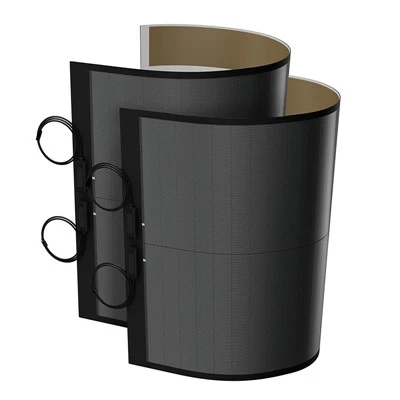
Lightweight Solar Power Integrated into Custom Awning Systems
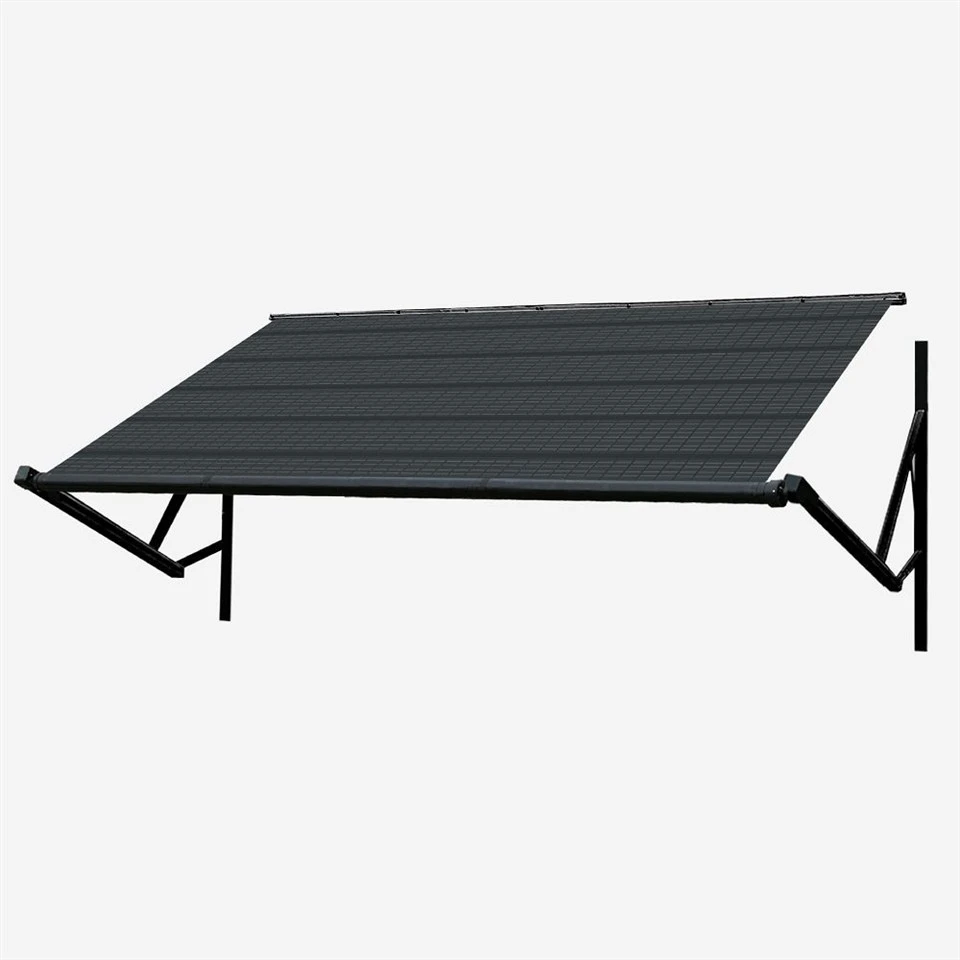
Flexible solar awnings combine photovoltaic power generation with outdoor shading, offering an alternative to rigid solar panels for applications where weight, mounting space, and structural flexibility are critical.
Available for OEM/ODM development, custom configurations, and bulk supply, flexible solar awning systems can be specified according to installation dimensions, power requirements, mounting methods, electrical interfaces, and environmental conditions.
-
![Motorhome Solar Awning]() Motorhome Solar AwningDesigned for large motorhomes, this solar awning combines shading and power generation in one system—helping users stay comfortable while maintaining a stable energy supply during long trips.
-
![Camper Solar Awning]() Camper Solar AwningA lightweight solar awning designed for camper vans and small RVs, providing both shade and portable power without adding significant weight or complexity.
-
![Travel Trailer Solar Awning]() Travel Trailer Solar AwningThis solar awning is designed for travel trailers, providing independent shade and power without relying on the towing vehicle.
-
![Van Solar Awning]() Van Solar AwningA practical solar awning designed for vans used in mobile work, travel, or conversion projects—providing both shade and an additional power source.


Key Product Features
Flexible photovoltaic integration: Cmpatible with standard and custom awning structures.
Custom dimensions and rated power configurations: Tailored to specific active solar areas.
Tailored electrical connections: Matched to the target battery or inverter system.
Marine and outdoor durability: Materials selected for weather, UV, and salt-spray resistance.
OEM/ODM development and private-label support: Full customization from prototype to mass production.
Strict quality verification: Backed by technical datasheet review, electrical testing, and environmental compliance.

A flexible solar awning integrates photovoltaic materials into an awning assembly to generate electricity while providing shade. Unlike conventional rigid solar panels, flexible photovoltaic constructions can accommodate curved surfaces and weight-sensitive installations.
The complete system includes photovoltaic laminates, awning fabric, supporting structures, electrical connections, and mounting components, designed to meet international standards such as IEC 61215 for photovoltaic performance and IP67/IP68 for moisture and dust protection.
Typical Applications
RV and Campervan Awnings: Auxiliary solar power for mobile living, camping, and onboard auxiliary batteries.
Marine Awnings: Solar-integrated shading for boats and yachts, engineered for high moisture and salt exposure.
Camping and Outdoor Equipment: Integrated solar charging for portable or semi-permanent outdoor structures.
Off-Grid Outdoor Facilities: Auxiliary electricity for lighting, security monitoring, and low-power equipment.
Commercial Outdoor Structures: Solar-integrated shading for commercial tents and temporary facilities.
Technical Specifications
Specifications are confirmed according to the selected configuration, environmental demands, and intended application.
|
Parameter |
Specification Options |
|
Product Type |
Flexible solar awning assembly |
|
Photovoltaic Technology |
Monocrystalline / SunPower cells selected according to efficiency and design feasibility |
|
Rated Power |
Configured according to active solar area and target electrical output |
|
Overall Dimensions |
Customized length, width, and coverage area |
|
System Voltage |
12V, 24V, 48V, or custom voltages matched to electrical system requirements |
|
Photovoltaic Construction |
Flexible PV laminate with ETFE protective top-layer |
|
Awning Fabric |
UV-resistant, waterproof marine-grade canvas or acrylic fabric |
|
Mounting Structure |
Track-mounted, rail-mounted, or direct-bonded installation conditions |
|
Electrical Connections |
Customized cable length, IP68 junction box, and MC4 or custom connectors |
|
Deployment Method |
Fixed, detachable, or retractable (subject to mechanical bend-radius validation) |
|
Operating Environment |
Specified for extreme temperature ranges, high humidity, UV exposure, and mechanical wind loads |
|
Optional Components |
MPPT charge controller, battery interface, or integrated power station compatibility |
Product Types and Configurations
Different applications require specialized combinations of photovoltaic materials, awning fabrics, structural components, and electrical interfaces.
RV Flexible Solar Awning:
Evaluated against vehicle roof curves, mounting space, weight constraints, and vibration resilience.
01
Marine Flexible Solar Awning
Features corrosion-resistant hardware, salt-spray-tested wiring, and high-moisture sealing.
02
Retractable or Foldable Solar Awning:
Requires specialized flexible laminates capable of withstanding repeated mechanical folding and bending without micro-cracking cell structures.
03
Custom OEM Solar Awning
Fully tailored around the buyer's exact dimensions, target power output, mounting interfaces, and branding.
04
Combined Shading and Power Generation: Integrates solar power directly into the overhead shade structure, removing the need for separate panel mounts.
Flexible Installation Options: Fits curved roofs, canvas canopies, and weight-limited structures where rigid glass panels cannot go.
Application-Specific Configuration: Dimensions, output voltage, fabrics, and connectors are fully coordinated with your equipment design.
OEM/ODM Support: Eenables equipmen Emanufacturers, distributors, and private-label brands to expand their catalog with solar-integrated products.
Integration-Focused Engineering: Early review of structural support, cable routing, and deployment mechanisms prevents compatibility issues during mass production.
Customization and OEM/ODM Development Process
Requirement Review
Confirm the target application, installation dimensions, power goals, and environmental exposure.
01
Technical Evaluation
Review photovoltaic materials, structural design, electrical limits, and manufacturing feasibility.
02
Sample Development
Prepare a fully functional prototype for physical and electrical evaluation.
03
Design Confirmation
Review dimensions, material samples, test results, and acceptance criteria.
04
Production Approval
Finalize bill of materials (BOM), quality control checkpoints, and packaging specifications before mass production.
05
Manufacturing Capabilities and Quality Control
Flexible solar awning production requires strict coordination between photovoltaic lamination, textile sewing, and electrical assembly.
Incoming Inspection
Rigorous testing of PV cells, encapsulation materials, fabrics, and cables.
Electrical Output Testing
Flash testing under standard test conditions (STC) to verify rated power and voltage.
Visual and Mechanical Inspection
Checks for lamination bubbles, uniform bonding, stitching integrity, and sealing quality.
Environmental and Stress Testing
Salt spray testing, UV exposure resistance, and mechanical bend-cycle testing for retractable variants.
FAQ

Request a Quote
Send your technical requirements for a configuration review and project-specific quotation:
Application: RV, marine, outdoor equipment, or commercial structure
Required dimensions and target rated power
Deployment method: Fixed, foldable, or retractable
Electrical requirements: System voltage and connector type
Estimated order quantity and target delivery schedule
OEM/ODM branding and packaging preferences
We're well-known as one of the leading flexible solar awning manufacturers and suppliers in China, also support customized service. With abundant experience, we warmly welcome you to wholesale bulk high quality flexible solar awning from our factory.
Camper Solar Awning, Motorhome Solar Awning, Van Solar Awning